AARTO 2026 Countdown: 5 things every South African driver must do before July 1st
To prepare for the national AARTO rollout on 1 July 2026, you must update your contact details on the eNATIS portal to ensure you receive electronic notices. Motorists should also settle all outstanding traffic fines now to avoid enforcement orders that could block licence renewals under the new system. Most importantly, you should check your current fine status to start with a clean record before the demerit point system officially begins on 1 September 2026.
What you will learn
The official timeline for the 2026 AARTO national rollout.
How electronic service of fines changes your legal responsibilities.
The impact of demerit points on your car insurance premiums.
Steps to take if you have old, unpaid traffic fines.
Why your vehicle licence disc could be at risk this year.
The official July 2026 AARTO rollout explained
The South African Department of Transport has officially set 1 July 2026 as the commencement date for the national Administrative Adjudication of Road Traffic Offences (AARTO) Act. While AARTO has been a pilot programme in Johannesburg and Tshwane for years, this date marks the beginning of a unified national system.
The move to a national system means that traffic enforcement will no longer be fragmented between different municipalities. Whether you are driving in Cape Town, Durban, or a small town in the Free State, the same rules and penalties will apply. This is a significant shift for South African motorists, as it replaces the old Criminal Procedure Act (CPA) for most traffic infringements with a new, faster administrative process.
1. Update your contact details on eNATIS
One of the biggest changes in 2026 is the introduction of "electronic service". This means the Road Traffic Infringement Agency (RTIA) can now legally serve you with a traffic fine via SMS or email. You can no longer rely on the excuse that you did not receive a registered letter in the post.
If your cell phone number or email address is outdated on the National Traffic Information System (eNATIS), you might miss a fine notice entirely. This leads to the fine escalating to an Enforcement Order without your knowledge. You must log into the eNATIS portal today and ensure your details are current. This simple step protects you from "hidden" legal issues and ensures you can take advantage of early payment discounts.
Steps to update your eNATIS profile
Visit the official eNATIS online services website.
Select the "My Profile" or "Update My Details" option.
Enter your South African ID number and current vehicle registration.
Verify your mobile number and email address.
Save the changes and keep a digital copy of the confirmation.
2. Settle your outstanding "legacy" fines
Many motorists believe that old fines will simply disappear when the new system starts. This is a dangerous myth. While demerit points only start counting from 1 September 2026, any unpaid fines from the previous system still exist.
If you have outstanding fines under the CPA, they could be converted into the AARTO system or remain as active warrants of arrest. More importantly, having an unresolved fine can result in an administrative "block" on your profile. This block will prevent you from renewing your vehicle licence disc or your driving licence card. Taking action to pay traffic fines in South Africa now ensures you enter the new era of road safety with a clean slate and no risk of roadside detention.

3. Understand the 2026 demerit point thresholds
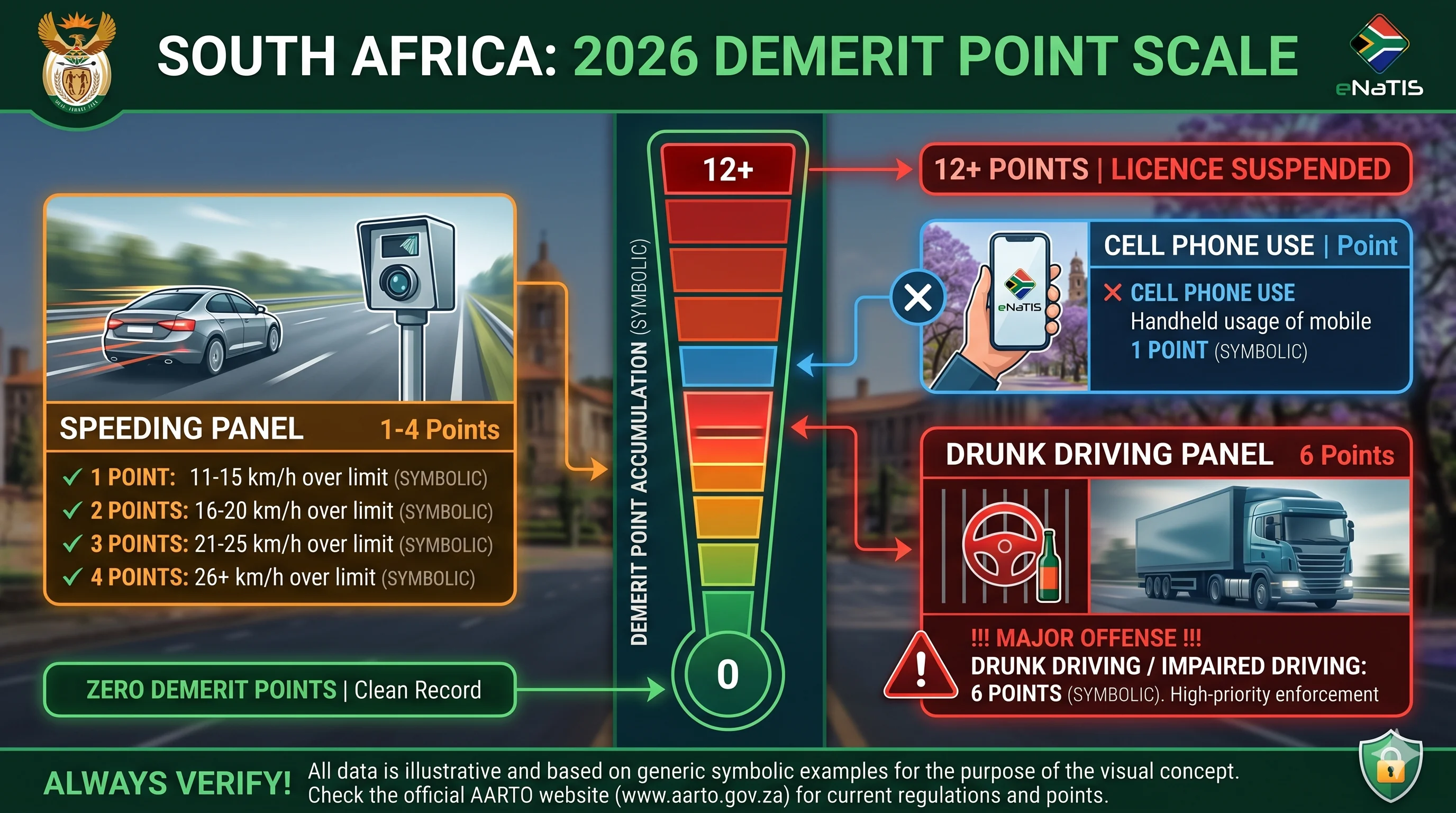
The demerit system is the most talked-about part of the AARTO Act. While the rollout starts in July, the points officially start sticking to your licence on 1 September 2026. You need to know your limits to keep your driving privileges.
For fully licensed drivers, the threshold is 15 points. If you exceed 15 points, your licence is suspended for three months for every point you are over the limit. For example, if you reach 17 points, you will be banned from driving for six months. If your licence is suspended three times, it is permanently cancelled. Learner drivers have it even tougher, with a threshold of only 6 points.
Common 2026 fines and demerit points
4. Check the impact on your car insurance
A clean driving record is no longer just about avoiding fines; it is now a major factor in your financial life. In 2026, South African insurance companies are beginning to use AARTO demerit data to assess risk.
If you accumulate points for reckless driving or speeding, your insurer may view you as a high-risk client. This can lead to your monthly premiums increasing significantly. Even worse, if your licence is suspended due to excessive points and you are involved in an accident, your insurer may legally refuse to pay out your claim. You must maintain a clean record to ensure your cover remains valid and affordable.
Why demerit points matter for insurance
Risk Profiling: More points signal a higher chance of a future accident.
Premium Hikes: Insurers may apply a "loading" to your premium based on your point balance.
Claim Rejection: Driving while suspended is an illegal act that voids most policies.
Excess Increases: You might be forced to pay a higher excess if you have a history of infringements.
5. Prepare for "Smart Enforcement" technology
The 2026 rollout is supported by a massive upgrade in traffic enforcement technology. Major metros have installed "Smart Cameras" that use artificial intelligence to detect more than just speed.
These cameras can now identify if you are wearing a seatbelt or if you have a mobile phone in your hand. Because these sensors use infrared light, they do not need a flash, making them "invisible" to drivers at night. The data from these cameras is synced in real-time with the national database. To stay safe, you must cultivate good driving habits now. Do not wait for July to start using a hands-free kit or checking your tyres regularly.
Checklist for a roadworthy vehicle
Check that all lights and indicators are working.
Ensure your tyres have a tread depth of at least 1.6mm.
Verify that your licence disc is current and clearly visible.
Ensure your windscreen is free of major cracks or chips.
Test your brakes and handbrake for any signs of wear.
How to dispute a 2026 traffic fine
Even with a national system, mistakes happen. If you receive a fine that you believe is incorrect, you still have the right to fight it. You must use the AARTO 08 Representation form.
You have 32 days from the date of the notice to submit this form. In your representation, you can provide evidence like GPS logs or photos to show why the fine is wrong. If the RTIA accepts your reason, the fine and the demerit points are cancelled. If they reject it, you can take your case to the AARTO Appeals Tribunal. This independent body is designed to protect motorists from unfair enforcement.
The hidden trap: Driving slowly in the fast lane
One interesting update for 2026 is the increased focus on "obstructing" the flow of traffic. Motorists can now be fined R1,000 for driving at low speeds in the fast lane (the right-hand lane) on highways.
This offence is seen as a major cause of road rage and dangerous overtaking. The Road Traffic Management Corporation (RTMC)has stated that the fast lane should only be used for overtaking. If you are not passing another vehicle, you must move to the left. Keeping the traffic flowing is a key goal of the 2026 safety campaign, and AI cameras are now specifically programmed to flag "lane hoggers".
Frequently asked questions about the July 2026 rollout
Will my old fines count towards demerit points?
No, demerit points only apply to offences committed after the system officially launches on 1 September 2026. However, your old fines must still be paid to avoid licensing blocks.
How do I check my current demerit point balance?
You can check your points on the official AARTO website or through our dedicated fine management platform. You can easily check fines with an ID number or view fines with an ID number on our secure portal to see all active notices and historical data linked to your profile.
Can I reduce my demerit points?
Yes, your points are reduced by one for every three months that you drive without committing a new offence. You can also attend a certified rehabilitation programme to remove up to four points once a year.
What happens if a company car gets a fine?
The company must nominate the driver who was using the vehicle. If they fail to do so, the company faces a significantly higher fine, and the vehicle licence renewal will be blocked.
Can I still go to court for a traffic fine?
Under the new AARTO system, the traditional right to a court trial for minor infringements is replaced by an administrative representation process. Only very serious criminal traffic offences will go directly to a magistrate.
Summary
The July 2026 AARTO rollout is the biggest change to South African driving laws in decades. By updating your eNATIS details, settling old debts, and understanding the demerit system, you can protect your licence and your wallet. The transition to a digital, point-based system is designed to make our roads safer, but it requires every motorist to be more proactive. Staying informed is your best defence against the penalties of the new era.
Don't wait for a surprise roadblock or a blocked licence renewal—especially when dealing with regional matters like City of Cape Town fines. Use our platform to check your outstanding fines today and ensure you are ready for the upcoming deadlines.