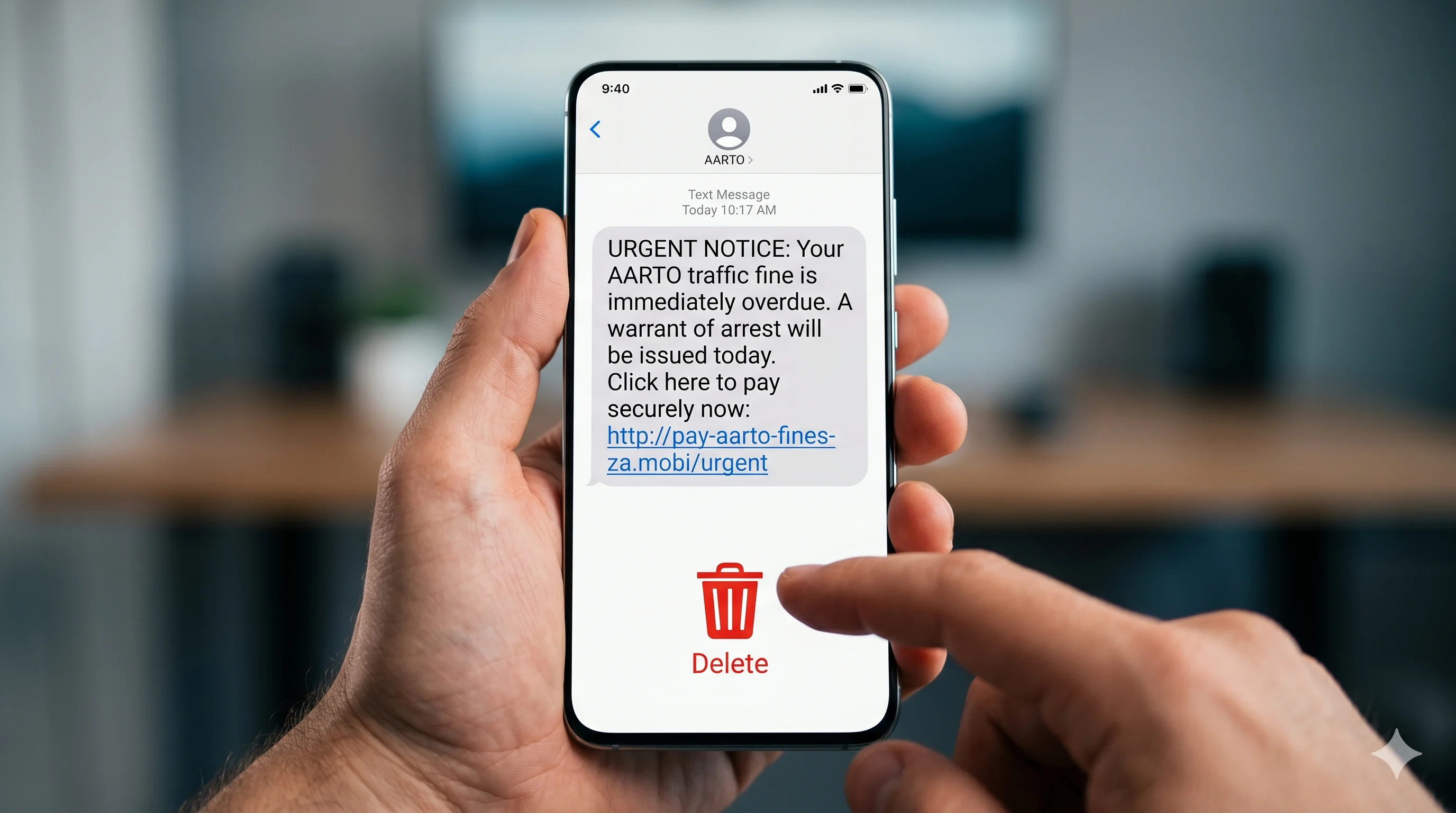
How to identify and avoid traffic fine scams in South Africa
To identify a traffic fine scam in South Africa, look for urgent SMS or WhatsApp messages containing suspicious payment links or threatening language. Legitimate authorities like AARTO or the RTMC do not send direct payment links via SMS; instead, they require you to log into secure, official portals or use registered banking apps. Always verify any "outstanding fine" by checking your ID number on a trusted fine management platform before making a payment.
What you will learn
Common tactics used by fraudsters to trick South African motorists.
How to distinguish a real AARTO notice from a fake one.
The red flags in "urgent" SMS and WhatsApp traffic fine alerts.
Safe, verified digital channels for checking and paying your fines.
What to do if you have already clicked a suspicious link.
The rise of traffic fine fraud in 2026
As South Africa nears the full implementation of the AARTO demerit system in July 2026, scammers are taking advantage of motorist anxiety. Fraudulent messages are becoming increasingly sophisticated, often cloning the branding of official entities like the Road Traffic Management Corporation (RTMC) or eNATIS to appear authentic.
These scams typically aim to steal your credit card details or trick you into making an "immediate settlement" into a private bank account. Understanding that traffic fine enforcement follows a strict legal process is your first line of defence against these digital criminals.
Red flags of a traffic fine scam
Scammers rely on creating a sense of panic. They often claim that a warrant of arrest has been issued or that your driving licence will be suspended within hours if you do not pay immediately.
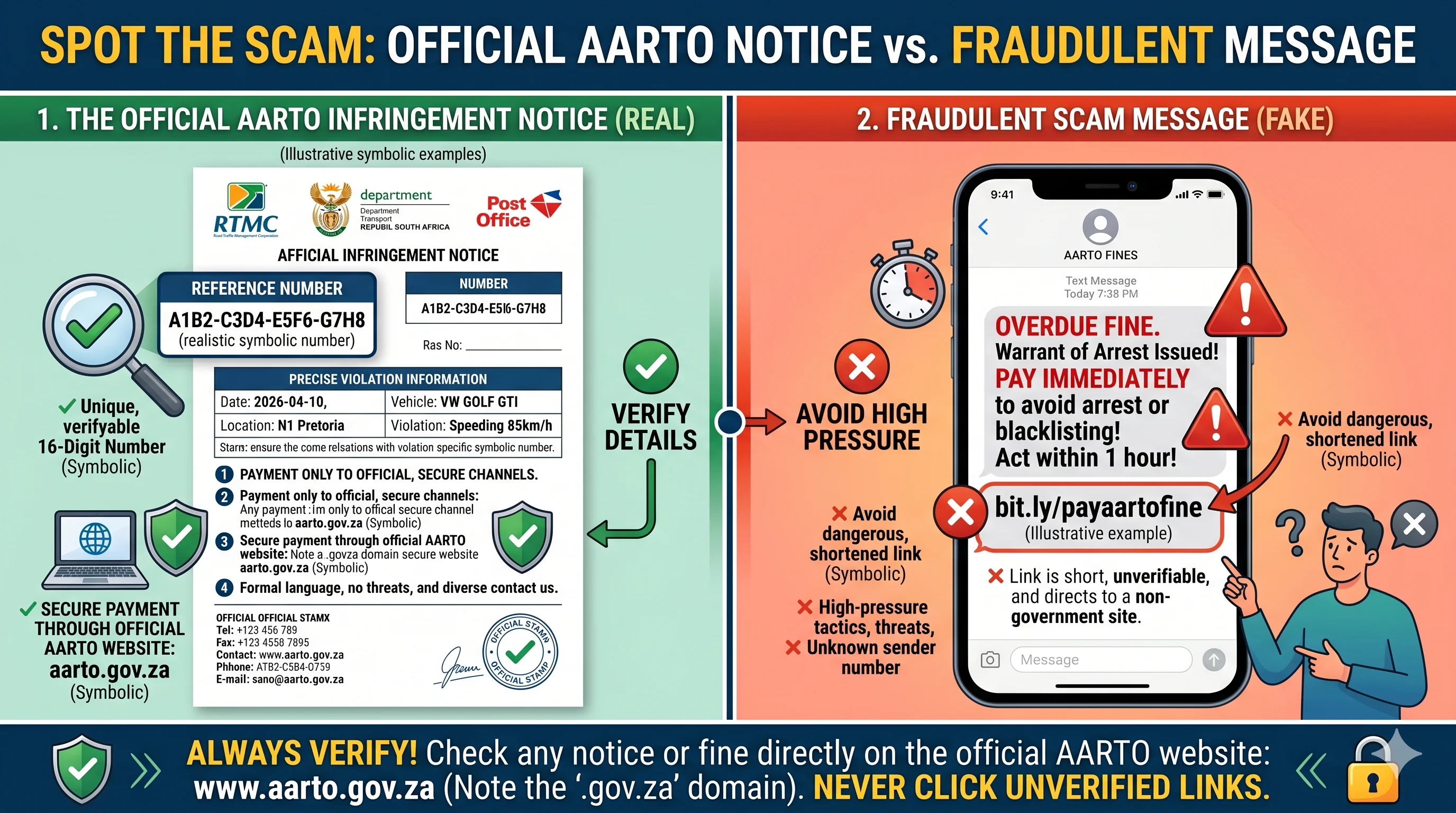
A legitimate traffic fine notification under the Criminal Procedure Act (CPA) is usually delivered via the South African Post Office as a registered letter. Under AARTO, while electronic service (email or SMS) is legally permitted, these official messages will never ask you to click a link to an unfamiliar website to enter your banking "OTP" or card CVV number.

How to spot a fake fine alert
Suspicious Links: Look for URLs that do not end in ".gov.za" or belong to a verified payment partner.
Sense of Urgency: Phrasing like "Pay in 2 hours to avoid jail" is a major red flag.
Unprofessional Language: Spelling errors or poor grammar are common in fraudulent messages.
Request for Personal Info: Official platforms already have your ID and vehicle details; they won't ask you to "confirm" your full credit card number via a chat app.
Unusual Payment Methods: Requests to pay via EFT into a private person's account or via cryptocurrency are always scams.
Real vs. fake traffic fine notices
How to safely check your traffic fines
The only way to be 100% sure about a fine is to "pull" the data yourself from a verified source rather than "pushing" a payment through a link sent to you. In 2026, the safest way to manage your infringements is through integrated digital platforms that have direct access to the National Traffic Information System (eNATIS).
You should regularly check your status on the official AARTO websiteor use your banking app's "Traffic Fines" feature. These channels use secure encryption and are directly linked to the South African government's enforcement databases, ensuring that your payment actually clears your record.
Safe steps for verifying a fine
Delete the SMS or WhatsApp message immediately without clicking any links.
Open your browser and manually type in the address of a trusted fine portal.
Enter your South African ID number to query the national database.
If no fine appears, the message you received was a scam.
If a fine does appear, pay it only through the portal's secure checkout or your bank.
What to do if you have been scammed
If you have accidentally entered your banking details into a fraudulent site, you must act quickly. Fraudsters often wait a few minutes before attempting to drain your account, giving you a small window to protect your funds.
First, contact your bank's fraud division immediately to stop your cards and freeze your internet banking. Second, report the incident to the South African Police Service (SAPS)and keep the case number. You should also alert the Road Traffic Management Corporation (RTMC)so they can track the specific scam tactics being used.
FAQ on traffic fine scams
Why did I get a fine SMS for a car I don't own
Scammers send thousands of messages randomly, hoping to hit a motorist who is worried about fines. If the details do not match your vehicle, it is a clear sign of a scam.
Does AARTO ever send WhatsApp messages
While authorities are moving toward digital communication, official WhatsApp channels are usually "inbound" (you message them) or used for automated reminders without direct payment links to external sites.
Can a scammer use my ID number to issue fake fines
Scammers cannot "create" a real fine on the eNATIS system. They can only create fake documents or websites that look like they are showing you a fine. Always verify on an official system.
Is PayCity or Fines SA safe to use in 2026
Yes, these are established third-party platforms that use secure payment gateways. However, always ensure you are on the correct, official website and not a "cloned" version.
What happens if I ignore a real fine because I thought it was a scam
If you are unsure, always check a secondary official source. Ignoring a real fine can lead to an Enforcement Order, which will block your licence renewal on the eNATIS system.
Summary
Traffic fine scams are a growing threat in South Africa, but they are easy to avoid if you stay calm and follow the correct verification steps. Never click on payment links in unsolicited messages. By using the AARTO portalor a secure management tool, you can protect your bank account and ensure your driving record remains in good standing.
Don't let scammers intimidate you with fake threats. Log in to our secure platform today using your ID number to see your verified, official traffic fine status in seconds.